


Barnet Council announces UK’s first-of-its-kind project
- Cladding Concerns
- Aug 26, 2024
In what could be a national issue, Barnet Council is sharing the findings of its investigation and remediation scheme with other local authorities and wants to work with national and regional government to see if there are ways to further support homeowners affected by the cladding issue.
What Barnet Council are doing
Barnet Council has announced plans to replace cladding on nearly 600 low-rise houses in its borough, in a multi-million-pound scheme that it believes will be the first of its kind in the country.Safety issues with the cladding on over 580 terraced homes came to the attention of Barnet Council following a serious house fire in one of the properties in the summer of 2023.
Following an investigation, it was found the UPVC cladding installed on the exterior of the properties allowed the fire to spread quickly to neighbouring homes. Along with the timber frame of these buildings and fire stop issues, they no longer meet more stringent post-Grenfell building standards.
Barnet Council has now written to all affected residents, detailing plans to replace the cladding on 153 council-owned homes, in a £3.6m scheme.
Alongside this, it is offering the 426 freeholders and seven leaseholders a package of works to replace the cladding, as well as a loan and repayment plan to freeholders to manage the cost.
Barnet Council is also alerting other local authorities to the problem and is writing to the Department for Levelling Up, Housing and Communities and the Greater London Authority to see what support can be provided to help homeowners facing huge costs for replacing out of date cladding on their properties.
Deputy Council Leader and Cabinet Member for Homes and Regeneration, Cllr Ross Houston, said he feared other homeowners in similar properties across the country could be similarly affected by this type of cladding.
He said: “The council will cover the cost for replacing cladding on its social housing stock but homeowners will unfortunately need to fund remediation for their own properties. The cost of replacing the cladding on each property could be up to £23,000 so to help we are organising* a loan and a repayment plan for those who need it, but we’re really limited on what we can do.
“We believe the 586 affected homes in Barnet are just the tip of the iceberg across the country. We’re sharing details with other local authorities and DLUHC as clearly there is need for a national plan to raise awareness and work out how best to support homeowners.”
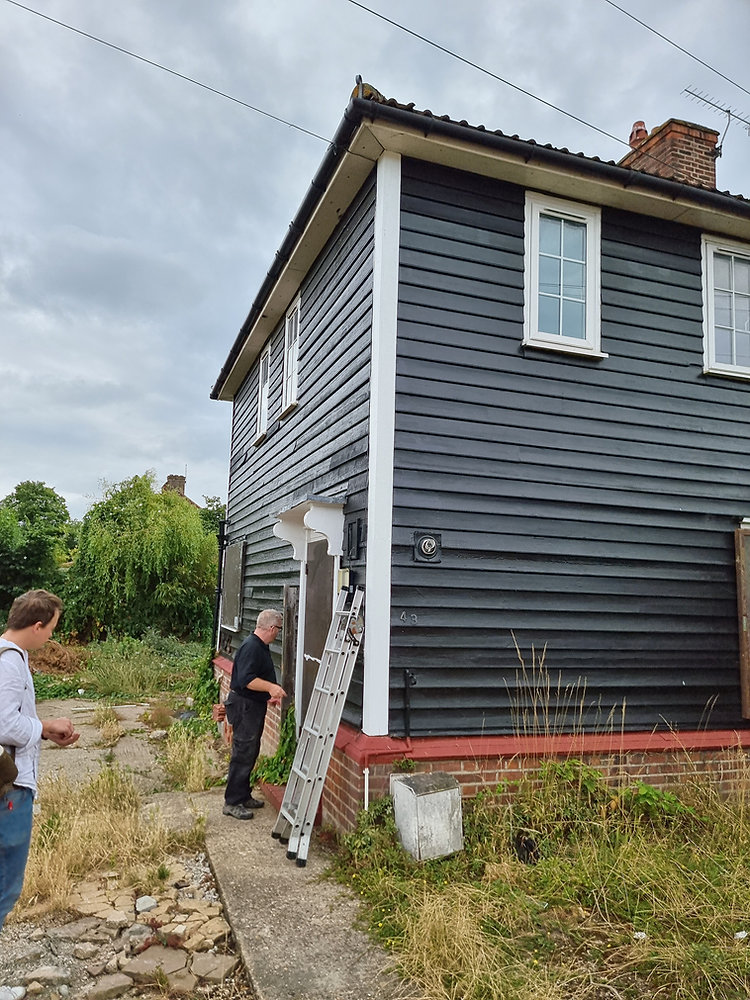
The 586 affected properties were built between the 1930s and 1960s and are timber-framed one or two-storey terraced houses, with original timber cladding or UPVC cladding installed in the 1980s. The privately owned homes were purchased through the government’s right to buy scheme. The houses are located in four areas across the borough.
The investigation last summer was conducted by expert building consultants, Capital, at the request of Barnet Homes (Barnet Council’s arm’s length management organisation for council properties).
“ We believe the 586 affected homes in Barnet are just the tip of the iceberg across the country ”
Category 1 hazard
Alongside the timber frame of these buildings and fire stopping issues, the cladding constituted a “Category 1 hazard”. This is the highest risk, where the council has a legal duty to take action.
Capital have confirmed that the works to the council homes cannot be completed without works to other properties in the terrace being completed in tandem.
The works are estimated to cost up to £23,000, depending on the size of the property.
Letters have gone out to all homeowners and occupiers of the properties letting them know that whilst their homes contain a significant hazard, there is no imminent risk to occupiers. Fire safety advice has been provided, and battery powered smoke detectors are being offered at no cost to all affected residents.
What is the total cost?
If approved by Cabinet, the £3.6m cost to council properties will be met by the Housing Revenue Account capital programme and a loan and repayment plan will be put in place for freehold owners.
The council has also secured £13m to pay for the up-front costs to freehold properties to ensure all the works required can go ahead, but homeowners will ultimately be responsible for their costs. They will be offered the option of a loan and repayment plan to help manage these costs.
The works began in April 2024 and be undertaken over a three-year period.
However, the fire in summer 2023 puts a new spotlight on low rise buildings. This took place in a property in Moss Hall Grove, West Finchley and the fire spread rapidly across the terrace of four properties
- £3.6m cost to council.
- The council has also secured £13m to pay for the up-front costs to freehold properties
- works began in April 2024 and be undertaken over a three-year period.
Barnet Homes will be carrying out the fire safety works to properties. There will be no additional cost to tenants, or changes to rents or service charges, as a result of these works.
The works will take approximately two to three weeks to complete. Most of the works will be to the exterior of properties, and access required to residents' homes will be minimal. Scaffolding will be erected around residents' homes so works can take place.
Barnet Homes will contact affected residents to arrange a specific date for the works to begin.
Battery powered smoke and heat detectors will be provided where needed to all affected homes at no charge
The properties affected were built between the 1930s and 1960s, using four different types of construction. All of the properties are constructed using a solid masonry separating wall between houses which is then supplemented with a front and rear elevation in timber with a cladding material affixed. This cladding generally spans the terrace. The council is not aware of the exact date that the cladding was installed, but believe it was during the late 1980s.

Email us to add your News
Email the News Team